Good governance is easy to take for granted when everything is running smoothly. Decisions are being made, bills are being paid, staff know roughly what to do, and issues are usually handled as they arise.
But as a business grows, the informal systems that once worked can start to create risk.
Approvals become unclear. Policies fall out of date. Reporting does not give management enough visibility. Compliance obligations increase. Risks are discussed, but not always documented or monitored. Eventually, business owners, directors or management teams may start to feel that the organisation has outgrown its existing governance processes.
That is where a governance, risk and compliance review can help.
A practical review of governance and risk compliance processes can give your organisation a clearer view of what is working, where gaps exist, and what needs to be strengthened.
What is governance, risk and compliance?
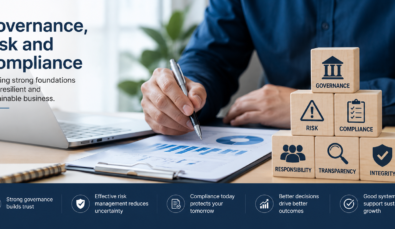
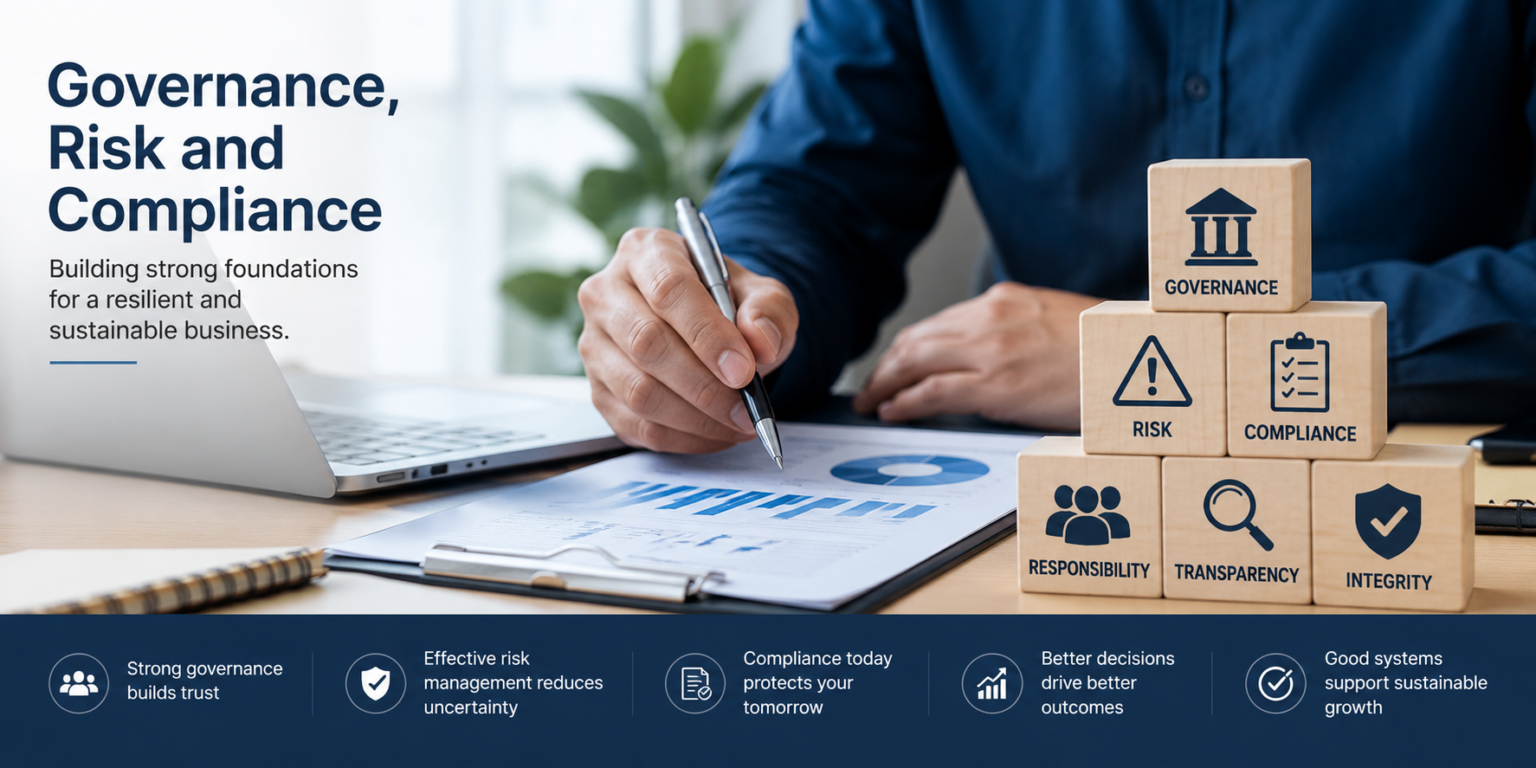
Governance, risk and compliance, often referred to as GRC, is the way an organisation manages accountability, risk and obligations.
In simple terms:
- Governance is how decisions are made, documented and overseen.
- Risk management is how risks are identified, assessed, monitored and addressed.
- Compliance is how the organisation meets its legal, regulatory, contractual and internal obligations.
Strong governance compliance and risk management processes help ensure that the right people have the right information, decisions are made with proper oversight, and the organisation can demonstrate that it is managing its responsibilities appropriately.
GRC compliance is not just for large corporates. It can be just as important for growing SMEs, private businesses, not-for-profits and organisations with complex operations or increasing stakeholder expectations.
Why GRC matters for growing businesses
Many organisations start with relatively simple governance structures. The business owner, directors or senior managers are close to the detail and can make decisions quickly.
As the organisation grows, that becomes harder.
More staff, more suppliers, more customers, more systems, more compliance obligations and more financial complexity all create additional governance risks.
Without a clear governance risk management and compliance framework, organisations may experience:
- unclear roles and responsibilities
- inconsistent decision-making
- poor visibility over key risks
- weak internal controls
- outdated policies and procedures
- compliance obligations being missed
- limited evidence of approvals or reviews
- inefficient reporting to directors or management
- increased risk of fraud, error or financial loss
A governance, risk and compliance review helps identify these issues before they become larger problems.
When should your business review governance, risk and compliance?
There is no single point at which every organisation needs a formal GRC review. However, there are several common triggers that indicate it may be time to assess your current governance, risk and compliance framework.
1. Your business has grown quickly
Growth is positive, but it can expose weaknesses in systems and controls.
A business that has doubled in size, expanded locations, taken on more staff or increased revenue may still be relying on processes designed for a much smaller operation.
This can create governance risks such as unclear approval limits, inconsistent financial controls, duplicated responsibilities or decisions being made without proper documentation.
A GRC review can help ensure your governance structure keeps pace with the size and complexity of the organisation.
2. Roles and responsibilities are unclear
If staff are unsure who can approve spending, sign contracts, manage risk issues or escalate compliance concerns, your organisation may be exposed.
Unclear responsibilities can lead to missed obligations, poor accountability and inconsistent decision-making.
A governance compliance and risk management review can assess whether responsibilities are properly assigned, documented and understood across the organisation.
This may include reviewing delegations of authority, board or committee charters, management responsibilities, reporting lines and escalation processes.
3. Your policies exist but are not being followed
Many organisations have policies and procedures in place but they may not reflect how the business actually operates.
Policies may be outdated, too complex, hard to find or inconsistently applied.
This creates a gap between what the organisation says it does and what actually happens in practice.
A GRC compliance review can assess whether policies are current, practical and properly embedded into day-to-day operations.
Common areas to review include:
- financial delegations
- procurement
- payroll
- expenses
- risk management
- compliance reporting
- conflicts of interest
- fraud prevention
- workplace policies
- record keeping
4. You are preparing for an audit or external review
If your organisation is preparing for an internal audit, external audit, funding review, grant acquittal or regulatory process, it is useful to review governance and risk compliance processes beforehand.
This can help identify weaknesses early and give management time to address gaps before they are formally examined.
Internal audit governance risk and compliance reviews can be especially useful because they provide independent assurance over whether controls, reporting processes and compliance frameworks are operating effectively.
5. Your compliance obligations have increased
As businesses grow, compliance requirements often become more complex.
This may happen because the organisation enters a new industry, expands into new locations, takes on government contracts, receives external funding, adds regulated services or changes its corporate structure. For organisations affected by anti-money laundering obligations, AML audit and compliance support can also form part of a broader governance, risk and compliance review.
A governance risk management and compliance review can help confirm whether obligations are being identified, assigned, monitored and documented.
This is particularly important where non-compliance could result in penalties, reputational damage, funding risk or operational disruption.
6. You are concerned about fraud, error or weak controls
Weak internal controls can expose an organisation to fraud, error and financial loss.
Common warning signs include:
- one person controlling too much of a process
- limited review of supplier payments
- poor segregation of duties
- manual workarounds
- unexplained variances
- inconsistent reconciliations
- unclear approval processes
- limited oversight of payroll or expenses
- poor system access controls
A GRC review can assess whether key controls are properly designed and operating as intended.
This does not mean creating unnecessary red tape. It means making sure the right checks and balances are in place to protect the organisation.
7. Reporting is not giving management the full picture
Good governance depends on good information.
If directors, business owners or senior managers are not receiving clear, timely and relevant reporting, it becomes harder to make informed decisions.
A governance, risk and compliance review can assess whether reporting is giving leadership the information they need around:
- financial performance
- key risks
- compliance obligations
- audit findings
- incidents or breaches
- operational performance
- strategic priorities
- action plan progress
Better reporting supports better oversight, stronger accountability and more confident decision-making.
8. You are planning a major change
Major business changes often create new governance risks.
This may include:
- acquiring another business
- opening new locations
- restructuring ownership
- appointing new directors
- introducing new systems
- expanding services
- entering new markets
- changing senior leadership
- preparing for sale or succession
Before a major change, it is worth reviewing whether your governance risk management and compliance processes are strong enough to support the next stage of the organisation.
9. The board or leadership team wants greater confidence
Sometimes there is no specific incident or compliance issue. The leadership team simply wants greater confidence that the organisation is well managed.
A GRC review can provide an independent view of whether governance structures, risk processes, compliance frameworks and internal controls are appropriate.
This can be valuable for directors, boards, committees, investors, funders and management teams who want assurance that the organisation is operating with proper oversight.
What does a governance, risk and compliance review cover?
The scope of a GRC review will depend on the organisation’s size, structure, industry and risk profile.
A review may include:
- governance structure
- board and committee reporting
- roles and responsibilities
- delegations of authority
- risk registers
- compliance obligations
- internal controls
- policies and procedures
- financial governance
- procurement and contract management
- payroll and expenditure controls
- fraud risk controls
- record keeping
- management reporting
- internal audit planning
- action plans and remediation tracking
The purpose is not to create complexity for its own sake. A good review should give your organisation a clear, practical view of what needs to be improved and how to prioritise the next steps.
How internal audit supports governance, risk and compliance
Internal audit plays an important role in governance, risk and compliance by providing independent assurance over key processes and controls. As part of broader audit and assurance services, internal audit can help organisations test whether policies, controls and reporting processes are working as intended.
An internal audit governance risk and compliance review can help identify whether policies are being followed, controls are operating effectively, risks are being monitored and compliance obligations are being met.
For many organisations, internal audit provides an objective lens that management may not have internally.
It can also help boards and leadership teams understand whether known risks are being properly managed, and whether improvement actions are being completed.
Benefits of reviewing governance, risk and compliance
A practical GRC review can help your organisation:
- improve accountability
- clarify decision-making processes
- reduce governance risks
- strengthen internal controls
- improve compliance visibility
- identify gaps before they become problems
- support audit readiness
- improve management and board reporting
- reduce fraud and error risk
- provide clearer evidence of oversight
- build confidence with stakeholders
For growing organisations, governance compliance and risk management processes are not just about avoiding problems. They can also support better performance, stronger decision-making and more sustainable growth. Where governance issues are linked to growth, structure, cash flow or strategic planning, MGI South Qld can also provide business advisory services to help organisations move from review findings to practical business improvement.
How MGI South Qld can help
MGI South Qld provides practical governance, risk and compliance services for Australian businesses and organisations.
Our team can help you review existing frameworks, identify gaps, assess internal controls and develop clear recommendations that are tailored to your organisation.
We can assist with:
- governance reviews
- governance risk management reviews
- compliance framework reviews
- internal audit governance risk and compliance reviews
- policy and procedure reviews
- internal control reviews
- board and management reporting reviews
- risk register reviews
- practical action plans
Our approach is designed to be clear, proportionate and useful. We help organisations strengthen governance, risk and compliance without adding unnecessary complexity.
Final thoughts
If your organisation has grown, changed, taken on new obligations or become harder to manage, it may be time to review your governance, risk and compliance framework.
A GRC review can help you understand whether your current systems are fit for purpose, where governance risks may exist and what practical improvements should be made.
MGI South Qld can help you assess where you are now and develop a clear plan to strengthen governance, risk and compliance across your organisation.
FAQs About Governance, Risk Management & Compliance
Governance risk management and compliance refers to the combined framework used to manage decision-making, risk oversight and compliance obligations. It helps organisations operate responsibly, reduce risk and improve accountability.
GRC compliance refers to the processes an organisation uses to ensure governance, risk management and compliance obligations are properly managed. It helps organisations identify obligations, assign responsibilities, monitor risks and maintain evidence that requirements are being met.
A business may need a GRC review when it is growing, preparing for audit, facing increased compliance obligations, concerned about internal controls, changing structure or seeking greater confidence in governance and reporting.
Internal audit supports governance, risk and compliance by independently reviewing whether controls, policies and processes are operating effectively. It helps management and boards identify risks, weaknesses and improvement opportunities.
Yes. Governance, risk and compliance services can be valuable for small and medium businesses, especially when they are growing, preparing for audit, managing new compliance obligations or improving internal controls.